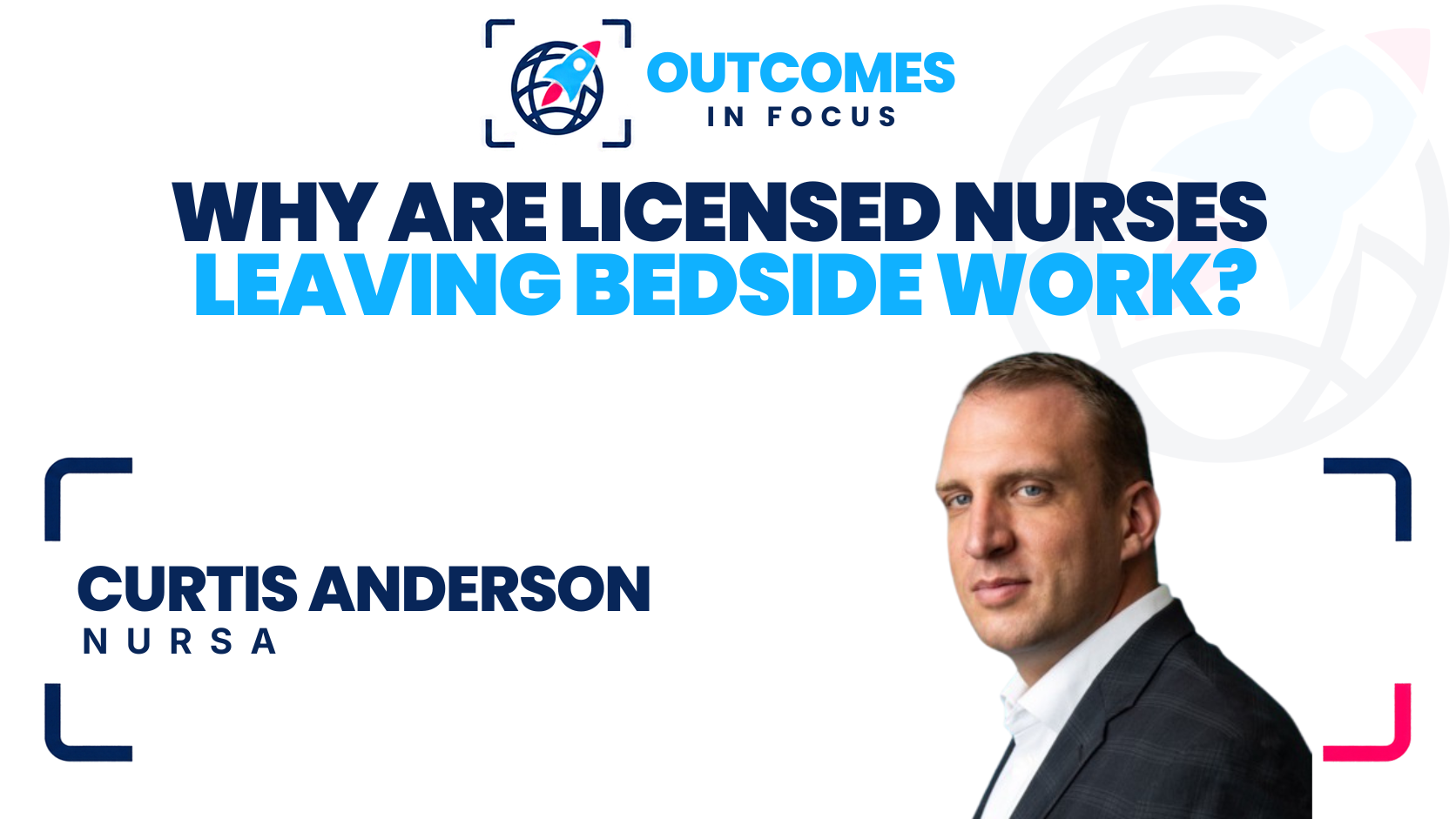
Featuring insights from Curtis Anderson, Founder and CEO of Nursa, in a conversation on the Outcomes Rocket podcast with our CEO, Saul Marquez.
A hospital has a shift to fill. Somewhere nearby, a licensed nurse may be willing to work, but not under the schedule or arrangement that facility is offering. Posting another vacancy won't necessarily bring the two together.
Curtis Anderson argues that healthcare staffing is partly a question of participation. In his conversation with Saul Marquez, he challenges the idea that every unfilled shift proves there simply aren't enough nurses. Facilities also need to look at the conditions that keep qualified clinicians from taking available work.
That distinction matters for healthcare operators. Recruitment remains important, but it may not solve the whole problem when licensed clinicians want more choice about when, where and how they work.
The Problem Curtis Found in Staffing
Curtis's route into healthcare staffing began when he acquired a nurse staffing agency in 2017. He describes a manual approach to matching clinicians with facilities that relied on whiteboards, sticky notes and human coordination.
He saw an opportunity to use technology to connect the two sides more directly. Rather than treating every request as a separate series of calls, Nursa operates as a two-sided marketplace where facilities seeking coverage and clinicians seeking shifts can find each other.
The platform is intended to match appropriate clinicians to facility needs while providing more control and visibility to both sides. But matching is more than finding an available person. Facilities need clinicians with the right qualifications, and clinicians need shifts that fit their circumstances.
For a staffing leader, this raises a practical question: how much of the time required to fill a shift is caused by a lack of qualified people, and how much by the process used to reach and engage them?
Give Nurses a Reason to Participate
Curtis challenges the conventional shortage narrative by emphasizing the gap between being licensed and choosing to work at the bedside. His argument is not that every location has ample staffing or that every nurse is available for a given shift. More flexible choices could help bring some qualified clinicians back into active work.
A nurse who cannot commit to a conventional schedule may still accept a shift that works around family responsibilities or other commitments. A facility may have a vacancy at exactly that time. Flexible work arrangements can create a way for those needs to meet.
That doesn't mean flexibility guarantees coverage, lowers costs in every setting or solves burnout. Clinical qualifications, staffing policies and reliable care remain essential. Curtis presents engagement as an opportunity to rethink participation, not proof that a single marketplace works for every facility.
Design for Both Sides of the Match
Nursa's model has two customers with different needs. Facilities want dependable staffing that fits their requirements and budgets. Clinicians want opportunities that suit their availability and allow them to earn a fair return for their work.
Curtis describes matching like-for-like and aiming to improve earnings for clinicians while lowering staffing costs for facilities. Those are goals of the model as he presents it, not independently verified outcomes for every customer.
An operator reviewing a flexible staffing approach can follow a single shift from request to completion. What qualifications must be verified? How does the clinician decide whether to accept? What information does the facility need before the shift starts? If the same clinician wants to return, how easy is it to reconnect?
These questions test whether technology improves a genuine staffing task. Speed alone is not the objective. Filling a shift quickly is valuable when the person is qualified, prepared and able to contribute safely to the care team.
Measure Participation, Not Just Open Positions
The staffing conversation often begins with vacancies. Curtis asks leaders to consider how many clinicians are willing to work under current arrangements and what would help qualified people participate more often.
Facilities cannot answer those questions from vacancy totals alone. They need to understand clinicians' preferences, difficult-to-cover shifts and why people do or do not return. Where appropriate, they can compare flexible staffing options against the cost and reliability of existing processes.
That doesn't remove the need to train new nurses, retain core staff or maintain consistent care. It adds another question to the workforce plan: is the organization making it too difficult for people already qualified to contribute?
Make the Next Shift Easier to Fill
Curtis's episode offers a straightforward change in perspective. When a shift goes unfilled, ask whether the organization has exhausted the available workforce or whether its current process and work arrangements are overlooking people who could participate.
Technology can make opportunities visible and connections more direct. But the test remains practical: appropriate clinicians taking shifts they want, and facilities securing the coverage their patients need. A larger roster by itself is not the same as a staffed bedside.
Before assuming the answer is simply more nurses, examine how the nurses already qualified to work can participate.
About the Conversation
In his October 27, 2026 Outcomes Rocket episode, Curtis Anderson spoke with Saul Marquez about acquiring a staffing agency, replacing manual matching with a two-sided platform and why he sees nurse engagement and flexibility as part of the staffing challenge. The conversation describes Nursa's approach, not independently verified outcomes for every facility.

Turn Healthcare Insightinto Accelerated Growth
Our healthcare growth teams work closely with you to design strategies tailored to your unique goals and market dynamics, fully focused on growth.
Book a Strategy Session →
Accelerating your growth with expert strategies in marketing, branding, research & insights, sales and lead generation to maximize healthcare impact.