Outcomes Articles
What Should a Medtech Startup Ask Before It Counts on Reimbursement?
November 20, 2026
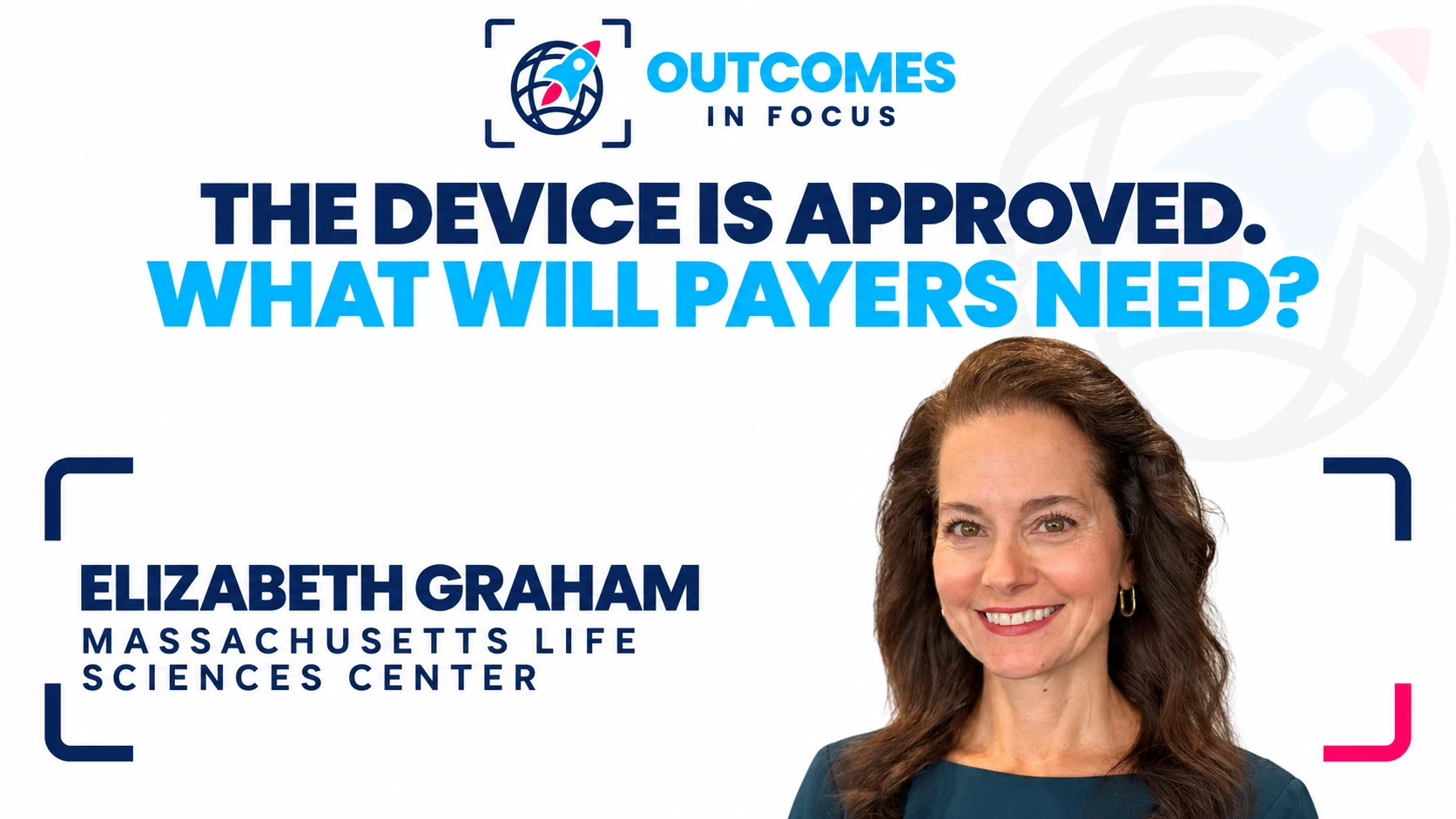
Elizabeth Graham, Interim President and CEO of the Massachusetts Life Sciences Center, joined host Saul Marquez on Outcomes Rocket at the MedTech Conference to discuss the gap between a device's approval and payer coverage.
Imagine a founder at a launch review, ready to put the first outpatient clinics on the calendar. Someone asks which payer would cover the device in that setting. The team has a date for its next regulatory milestone and a forecast for how often clinics will use the device. It can't point to a coverage policy that supports the forecast.
The answer could change how many clinics the founder signs up for the first phase. Elizabeth's interview gives the team a place to start. Pick the assumption the rollout depends on and find out what it would take to test it.
Separate Regulatory Progress From the Payer Decision
In the clinic example, the sales team uses that forecast to pick its first sites, and operations uses it to figure out how much training and support to budget. Ask both teams what they would commit to if coverage took longer than they expect. That will tell the founder whether it makes sense to plan for one clinic or several.
Elizabeth described how a device can reach approval while the company is still waiting for a payer commitment. The regulatory milestone has its place on the timeline. Give coverage a separate entry in the launch plan with whatever the team can substantiate.
Put the coverage assumption next to the projected volume and mark the decisions that depend on it. The team can still talk to prospective clinics and find out what onboarding would take. It can revisit the number of sites once it has a better basis for the forecast.
Give the Adviser One Question to Answer
Elizabeth said the specialist work required to understand the reimbursement landscape can be difficult for an early-stage company to fund. The Massachusetts Life Sciences Center focused the first cycle of its Access and Accelerate Grant Program on helping device startups obtain that analysis. Even when a team can pay for outside help, it still has to decide what it needs the adviser to find out.
Give the adviser the intended use and clinic setting. Ask who would make the coverage decision and what sources back up that answer. Say the closest published policy applies to inpatient hospital care, while the rollout is planned for outpatient clinics. Ask the adviser to show where that policy's language applies to the proposed use and where the change in setting leaves an open question. The team can then see how much weight the policy deserves in its launch forecast.
Send a short inventory of the evidence the company already has. Ask the adviser to show which parts speak to the payer's likely questions and where its expectations are still unclear. Have the adviser document the source for each finding so someone on the launch team can check it before spending more.
Let the Analysis Change the Next Evidence Decision
Suppose the adviser identifies who sets coverage and finds a policy that calls for evidence the team hasn't mapped. The commercialization lead can commission a focused review of the studies already in hand. Ask the reviewer to show which findings address the policy question and where new work may be needed. That gives the founder a basis for deciding whether to fund more research.
If the adviser still can't establish who makes the coverage decision, the lead has a different job. Bring the volume forecast back to the team and show which clinic commitments depend on the unresolved assumption. Then the founder can decide which preparations still make sense while the answer is pending.
Elizabeth sees a broader reason to help early-stage device companies pay for that expertise. Established companies look to smaller firms for new research and discoveries, and early support can give those firms a chance to test the assumptions their plans depend on.
Name the Next Payer Question Before the Launch Review
Bring a short note to the next launch review. Name the clinic setting, the assumption behind the forecast, and the question that could change it. Give the commercialization lead responsibility for getting an answer and recording what supports it.
When the lead reports back, choose one commitment the company can make now, such as building a training schedule with its first clinic. Write down what would justify expanding to more sites. The team can return to that decision when it has stronger evidence.
About the Conversation
On Outcomes Rocket, Elizabeth Graham and host Saul Marquez discuss the reimbursement questions device companies face after approval. They also cover why specialist advice is hard for some early-stage teams to fund and how the first Access and Accelerate grant cycle was designed to help.
Resources

Turn Healthcare Insightinto Accelerated Growth
Our healthcare growth teams work closely with you to design strategies tailored to your unique goals and market dynamics, fully focused on growth.
Book a Strategy Session →
Accelerating your growth with expert strategies in marketing, branding, research & insights, sales and lead generation to maximize healthcare impact.