Outcomes Articles
What Hospital AI Can Do Before a Call Gets Transferred
November 12, 2026
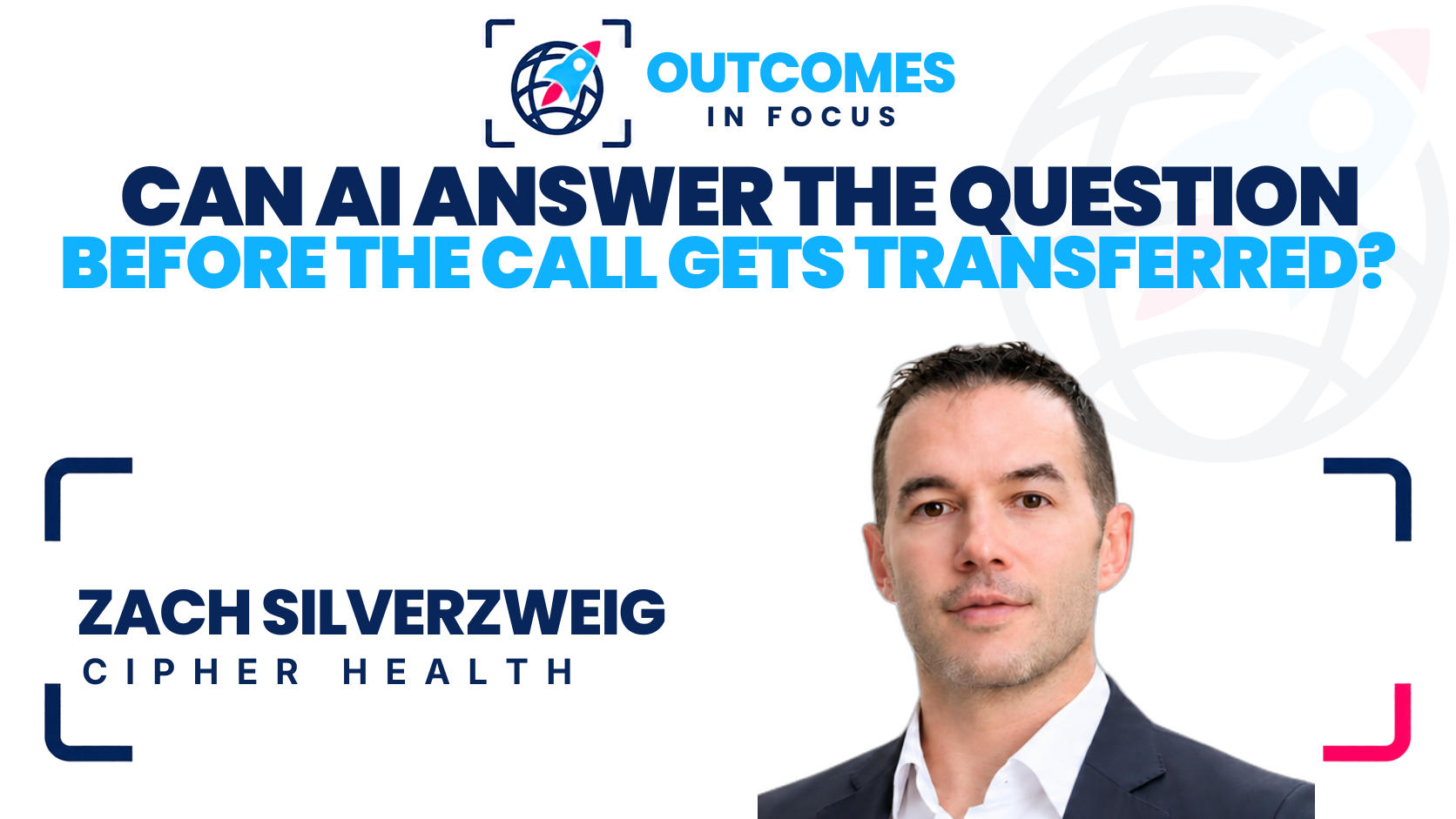
Featuring insights from Zach Silverzweig, Co-Founder and CEO of CipherHealth, in a conversation on the Outcomes Rocket podcast with our CEO, Saul Marquez.
A patient calls the hospital to ask what happened to a referral. The contact center agent can confirm the clinic received it, but the information the patient actually needs sits somewhere else. Did scheduling try to reach them? Was an appointment offered? Does someone still need to take action?
The agent may have to transfer the call to find out. The patient waits, repeats the question and hopes the next person has access to the right information.
Zach Silverzweig, Co-Founder and CEO of CipherHealth, sees an opportunity for AI to help close that gap. In his Outcomes Rocket interview, he describes how AI could gather information from multiple hospital systems, identify what a caller might need and suggest next steps while keeping the agent responsible for the interaction.
For hospital leaders evaluating AI, the question is whether it helps staff resolve the patient's problem with reliable information, not simply whether it reduces the number of transfers.
Find the Work Hidden Between Applications
A contact center agent may have access to a referral record without being able to see what happened in scheduling. That missing information creates work for another department, even when the answer already exists somewhere in the hospital.
Zach describes an opportunity to connect information across systems so agents can respond more effectively. Rather than replacing the person handling the call, AI could retrieve relevant information, listen to the conversation and suggest questions or actions.
His perspective builds on CipherHealth's earlier experience with patient communication. The company initially developed post-discharge outreach to identify problems patients encountered after leaving the hospital, including confusion about instructions, medications and follow-up appointments.
CipherHealth later introduced digital rounding tools to address some of those concerns while patients were still hospitalized.
The progression illustrates a recurring challenge: Finding a problem earlier is valuable, but only if the organization can act on the information.
For the referral example, that might mean showing the agent both the referral status and the latest scheduling activity. The agent could then verify whether an appointment was attempted, explain what happened and determine whether scheduling needs to get involved.
A useful AI application should make that work easier without creating another system employees must navigate.
Getting AI Into Production Is the Harder Problem
Zach also makes an important distinction between building an AI prototype and deploying something a hospital can safely use.
AI tools can make early development significantly faster. But production requires integration, access controls, security reviews and alignment with the health system's existing workflows.
Different hospitals have different security requirements, and a solution that performs well in a demonstration may not be ready to handle sensitive patient information.
For a hospital considering an AI-assisted contact center, data access should be part of the initial evaluation, not a problem left until implementation.
Start with a specific call type. Identify which systems the agent needs to consult, which information they are authorized to access and what happens when a lookup fails.
A blank scheduling field, for example, could mean nobody has acted on the referral. It could also mean the system couldn't retrieve the record.
Those situations require different responses.
The agent needs to know where the information came from, whether it is current and when a concern should be handed to another team.
AI can prepare information and suggest an action. The hospital still needs clear responsibility for verifying the information and making the appropriate decision.
Measure Whether the Patient Got an Answer
Reducing transfers sounds like an obvious measure of contact center efficiency. But fewer transfers don't automatically mean better service.
Imagine an AI tool that helps an agent complete a call without involving scheduling. If the patient still doesn't know what happened to the referral and calls back the next day, the original problem remains.
Zach's proposed approach offers an opportunity to measure something more meaningful: whether AI helps existing teams handle requests effectively.
For a pilot involving referral calls, hospital leaders could examine three outcomes:
- Verified resolution: Could the agent answer the patient's question using information from an authorized source?
- Appropriate escalation: When another department was needed, did the agent explain the handoff and provide relevant context?
- Repeat contact: Did the patient need to call again about the same unresolved issue?
These measures distinguish faster call handling from actual problem resolution.
Hospitals should also examine failed lookups, incorrect suggestions and situations in which agents still need to contact another department to verify what happened.
The goal isn't to eliminate every transfer. It's to eliminate avoidable work while preserving the handoffs patients genuinely need.
Test One Call Type Before Expanding
For hospital leaders considering AI in the contact center, a focused pilot can reveal more than a broad demonstration.
Start with one common question, such as the status of a referral. Bring together the contact center lead, an experienced agent and the person responsible for data access.
Review a small sample of calls the team is authorized to examine. Identify the information the agent needed, where that information lived and why another department became involved.
Then test whether the proposed AI workflow makes that information available, supports verification and helps the agent take the appropriate next step.
Compare calls before and during the pilot. Look beyond average handling time to understand whether patients received answers and whether staff could safely rely on the information provided.
If the tool struggles with missing records, permissions or unreliable suggestions, address those limitations before expanding to other workflows.
The decision to scale shouldn't depend on how impressive the AI demonstration looks. It should depend on whether the technology reliably improves the work people are already responsible for doing.
Zach's perspective offers a practical direction for hospital AI: keep people accountable for the interaction while giving them better access to the information needed to help patients.
A successful contact center pilot may still require a transfer. But the patient should receive a clearer answer, a better-informed handoff or a next step that doesn't require starting over.
About the Conversation
Zach Silverzweig's conversation with Saul Marquez on Outcomes Rocket explores CipherHealth's evolution from post-discharge outreach to inpatient rounding, the challenges of deploying AI in hospital environments, and how AI can help existing teams work more effectively without removing people from the process.

Turn Healthcare Insightinto Accelerated Growth
Our healthcare growth teams work closely with you to design strategies tailored to your unique goals and market dynamics, fully focused on growth.
Book a Strategy Session →
Accelerating your growth with expert strategies in marketing, branding, research & insights, sales and lead generation to maximize healthcare impact.