Outcomes Articles
Patients Need More Options. But Do They Know What's Available?
November 5, 2026
Erick Rivera had lost both parents to complications from diabetes. He wanted to avoid the same outcome, so he started asking questions about what else could help him manage his condition.
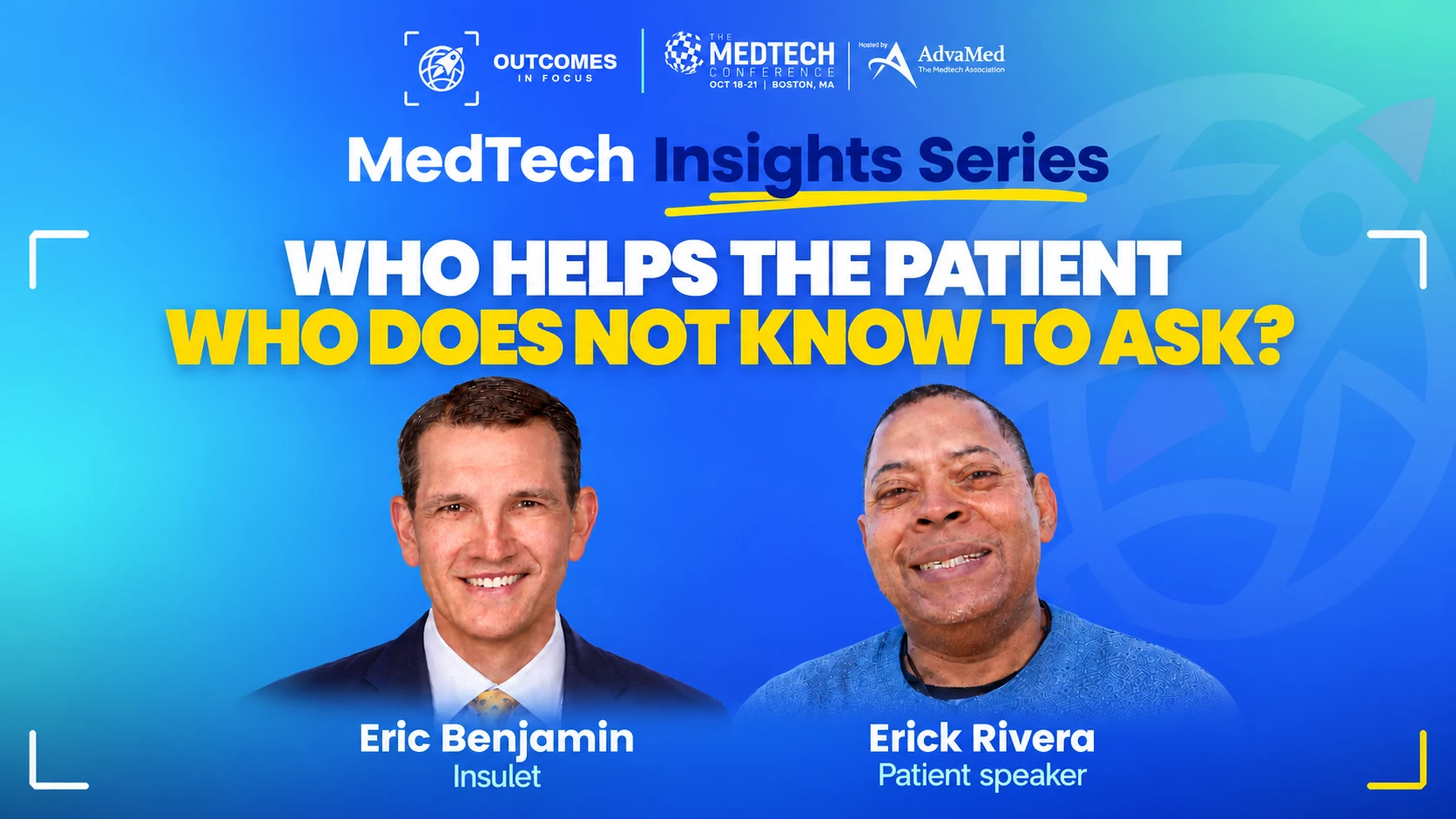
During "Patient Story: Insulet" at The MedTech Conference in Boston on October 19, 2026, Erick shared how advocating for himself eventually led him to an endocrinologist who introduced him to Omnipod 5.
He was joined by Eric Benjamin, Executive Vice President and Chief Operating Officer of Insulet, who moderated the conversation.
Erick's experience raised an important question for healthcare technology companies: What happens to patients who don't know which questions to ask?
A treatment option can be available, but that doesn't mean patients know it exists, understand whether it might be appropriate or know how to access it.
Finding the Right Option Starts With Asking
Erick described the challenges of managing diabetes and the impact the condition had on his family.
After losing both parents to diabetes-related complications, he was determined to explore different ways to manage his health.
He continued exercising, asked his primary care physician about other options and eventually connected with an endocrinologist who knew about Omnipod 5.
His experience highlights something that can be easy to overlook when discussing healthcare innovation.
Patients often need to take several steps before they can even have a conversation about a particular technology.
They need to know that alternatives may exist, find someone who can discuss them and understand what to do next.
For healthcare companies, that raises a practical question: Is our information useful to someone who has never heard of our product?

Patients Don't Always Feel Comfortable Speaking Up
Erick also discussed shame and stigma surrounding diabetes.
Those feelings can make an already complicated healthcare journey more difficult.
Asking questions, discussing concerns and searching for treatment options require confidence, particularly when someone feels uncomfortable talking about their condition.
Erick encouraged people to advocate for themselves, but his experience also highlighted how much responsibility can fall on the patient.
An instruction to "ask your doctor" may sound straightforward.
But what if someone doesn't know what to ask? What if they don't feel comfortable raising the subject? What if they don't know which clinician can help?
These are questions healthcare organizations can explore with the people they serve.
Making information available is important. Making it understandable and helping patients find the next step deserves just as much attention.
Access Goes Beyond Awareness
Eric Benjamin of Insulet discussed the industry's responsibility to reduce barriers to care.
He described goals around simplifying the patient experience, broadening access and making the technology more affordable for people who might benefit.
He also discussed a future in which primary care physicians could offer the technology, potentially making it easier for patients to explore their options.
These were goals for improving access, rather than guarantees about current coverage, prescribing pathways or individual patient costs.
The discussion highlighted how much happens between hearing about a technology and being able to use it.
A patient may know a product exists but still need help finding a knowledgeable clinician or understanding the financial considerations.
For healthcare companies, awareness is one part of a much larger experience.
Make the Next Step Easier to Find
Erick's story offers a useful starting point for teams working on patient education, marketing and access.
Consider someone who needs help managing a condition but has never heard of your technology.
Where would that person begin?
Could they understand what options might be worth discussing with a clinician? Would they know where to find reliable information? Could they identify the next step without already knowing the product name?
These questions can help teams evaluate whether their materials are genuinely useful to patients.
It may mean simplifying an explanation, clarifying where to seek help or improving the handoff between awareness and a clinical conversation.
The best way to find out is to ask patients to follow the available information and identify where they get stuck.
Erick was determined to find another option. His story challenges healthcare companies to consider how they can make that journey easier for people who might not know where to start.
About the Conversation
This article draws on "Patient Story: Insulet" at The MedTech Conference in Boston on October 19, 2026.
The session featured patient speaker Erick Rivera in conversation with Eric Benjamin, Executive Vice President and Chief Operating Officer of Insulet.
They discussed Erick's experience managing diabetes, the importance of patient advocacy and the industry's role in reducing barriers to care.

Turn Healthcare Insightinto Accelerated Growth
Our healthcare growth teams work closely with you to design strategies tailored to your unique goals and market dynamics, fully focused on growth.
Book a Strategy Session →
Accelerating your growth with expert strategies in marketing, branding, research & insights, sales and lead generation to maximize healthcare impact.