Your team spends three days at a major industry conference. The booth is busy. Badge scans sync to the CRM that night, every lead has notes, and your reps send personal emails before the week is out.
Two weeks later, the follow-up quietly stops.
The team did the hard part. They got in front of the right people and had real conversations. What they did not do is stay in front of those people long enough to turn a good conversation into an opportunity.
The show speeds the deal up. It does not finish it.
A good booth conversation is worth a lot. The buyer has met you, heard your story and told you what is keeping them up at night. You start that relationship weeks ahead of where any cold email would put you.
But a hospital value analysis review can take three to nine months, according to Med Device Guide. And the person you met is one voice on a buying committee of six to ten people. Two emails after the show will not hold their attention that long, and they will never reach the rest of the committee.
Teams follow up. They just stop too soon and say too little.
Here is what post-show follow-up looks like at a lot of companies. A thank-you note. Then a deck or a calendar link. Then the contact gets added to the monthly newsletter, and that is the end of it.
None of those touches gives the buyer anything new. They already have your deck. They already know you exist. What they do not have is a reason to take the next call.
Tracking plays a part too. In our 2026 State of B2B Event Marketing study, only 39.2% of teams tag every conference lead to the event it came from. If the leads are not tagged, you cannot build follow-up around the show, and you cannot tell what the show produced.
Sort the list before you follow up
Not every lead from the booth needs the same thing.
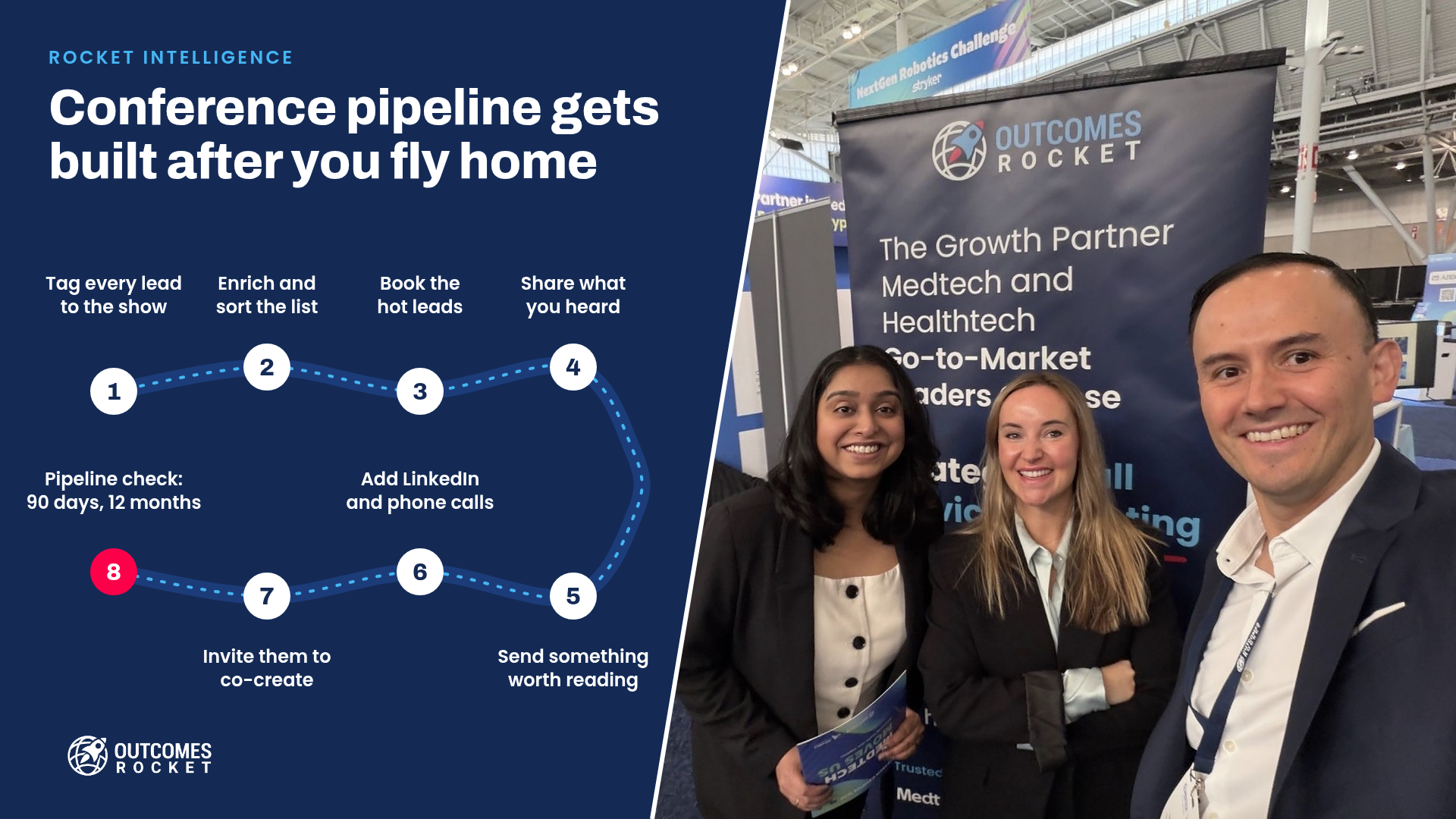
Some are ready now. They named a problem, a timeline and who owns the budget. Get a sales call on the calendar while you are still at the booth, or the week after at the latest.
Some are the right account and the right title, with nothing urgent on their plate. They need 10 to 12 weeks of follow-up built on what you learned at the show: what buyers kept asking about, which problems came up again and again, and what their peers are doing about them.
And some are people you want to know for the long haul. Invite them to create something with you. A podcast episode, an article you write together, a quote in your next blog post. After that, you are not a vendor they met at a booth. You are someone they have worked with.
If your next show is coming up
- Agree on what makes a lead hot before the booth opens, so reps can tag it when they scan along with specific follow up notes.
- Walk in with open meeting slots for the following week, and book the hot leads before they leave if possible.
- Draft the 10 to 12 week follow-up plan now, and leave room to add what you hear on the floor.
If you just got back from an event
- Pull every lead tagged to the show, enrich the leads with revenue and employee data, and sort it. Any hot lead without a meeting booked gets a call from their rep this week, the rest get entered into value added follow up sequences that use more than just email as a follow up channel. Include LinkedIn DMs and phone calls. Even snail mail where applicable.
- Write up what you heard. The questions buyers asked and the problems they named make the strongest first touch in your follow-up.
- Pick five people and invite them onto your podcast or to co-write an article with you.
Recap
The money you spend on a conference buys you a head start. The weeks after the show is where that head start turns into pipeline.
Book the hot meetings. Keep the qualified leads warm with something worth reading. Bring the right people into your content. Then check the pipeline at 90 days and again at 12 months, and hold it up against what the show cost.
And if you don't want to do it alone, let us know.

Turn Healthcare Insightinto Accelerated Growth
Our healthcare growth teams work closely with you to design strategies tailored to your unique goals and market dynamics, fully focused on growth.
Book a Strategy Session →
Accelerating your growth with expert strategies in marketing, branding, research & insights, sales and lead generation to maximize healthcare impact.