Outcomes Articles
The Appointment Ends. Can AI Support Chronic Care Between Visits?
October 30, 2026
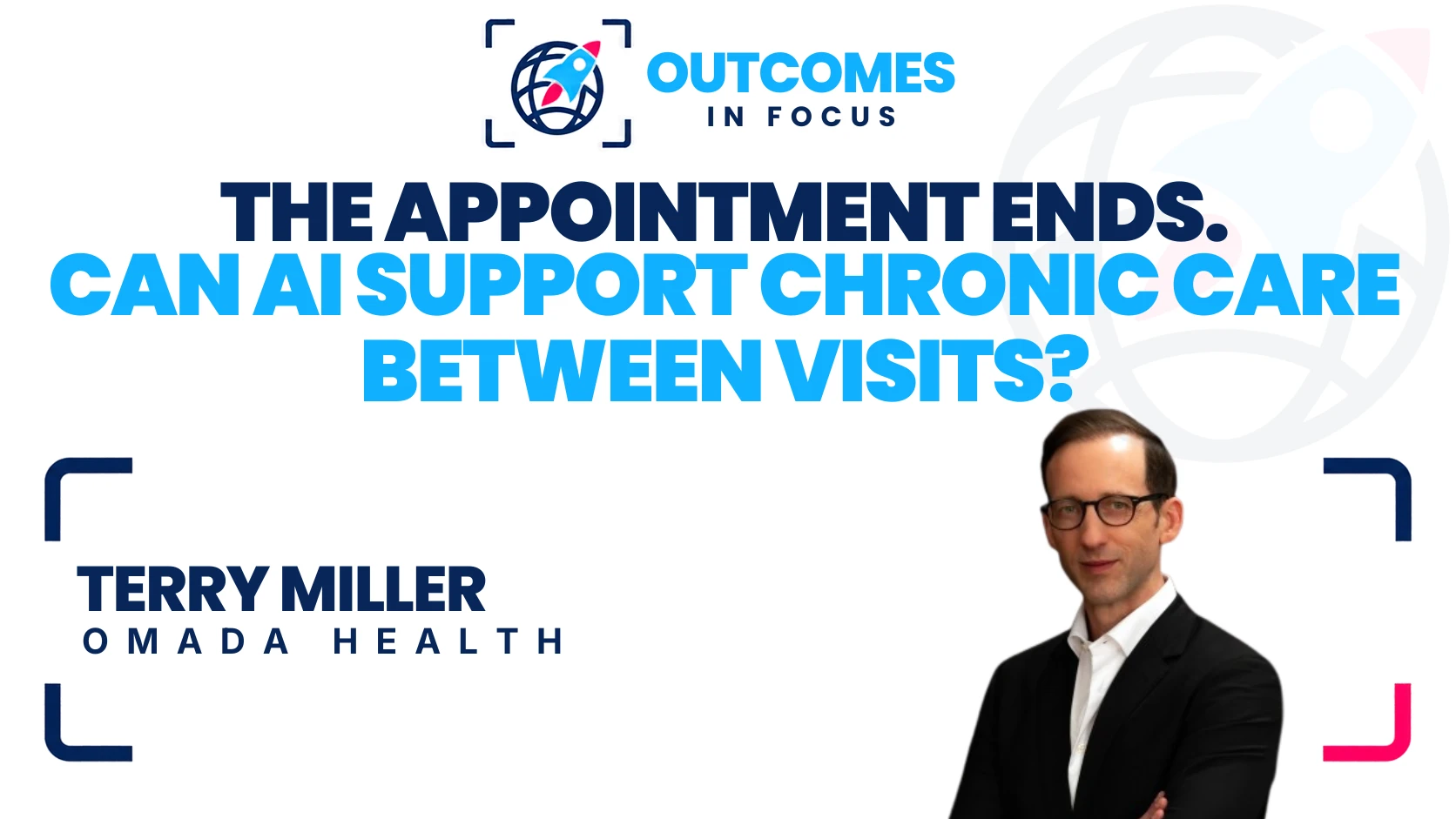
Featuring insights from Terry Miller, Vice President of Machine Learning and AI at Omada Health, in a conversation on the Outcomes Rocket podcast with our CEO, Saul Marquez.
A person managing a chronic condition may receive new health information between appointments. A wearable records a reading. A mobile tool makes it visible. But another data point does not necessarily tell the person what to do next, or help them keep going the following day.
That is the problem Terry Miller explores in his Outcomes Rocket conversation. He describes a future in which care moves closer to where people live and AI becomes a more consistent source of support. The useful question is whether those technologies can help people take appropriate next steps over time, while keeping human caregivers involved.
Bring Care Closer to Everyday Life
Terry uses the term edge healthcare to describe care reaching people outside traditional clinical settings. He discusses wearables, biometrics, mobile diagnostics, robotics and AI as technologies that could contribute to that shift.
Those tools have different roles. A wearable may gather information while someone is at home. A mobile experience can make it accessible. AI may help organize it or suggest follow-up. Together, they point toward support between visits rather than making every interaction depend on an appointment.
That is a direction for healthcare technology, not a claim that every capability is already delivered by Omada Health or that a device can replace a clinician. For a digital health company, the practical decision is narrower: What does a patient or care team gain from having this information earlier or more often?
Look at Change Over Time
Terry emphasizes a longitudinal view of health: understanding information across time, rather than judging a person's needs from one isolated reading. That is especially relevant when people are managing ongoing conditions and their needs change between appointments.
A longer view could help a care organization recognize patterns and consider whether support is needed sooner. It could also help tailor a person's experience instead of offering the same recommendation every time.
But a longer record is not proof that an intervention will work. The information must be meaningful, the response appropriate and the care team clear about when it should become involved. The episode presents the opportunity for more proactive care; it does not establish a specific improvement in health outcomes from an AI companion.
Move Beyond One-Time Recommendations
A health tool can offer a recommendation and leave the person to figure out how to follow it. Terry's vision goes further. He discusses AI moving from static suggestions toward an agentic companion that could stay engaged, help coordinate care and support the people already caring for the patient.
An ongoing companion might help someone stay oriented to a goal or connect them with the right support as needs change. That does not mean an AI system should make independent clinical decisions or that a fully autonomous companion is already in use. Terry is describing a direction he believes healthcare AI could take.
For teams building digital health products, the question becomes what happens after the first recommendation. Does the experience remain useful when circumstances change? Can it direct a concern toward a caregiver when human judgment is needed? The answer matters more than calling the product agentic.
Keep the Care Team Part of the Design
Terry frames AI as a companion to people and caregivers, not a substitute for them. That puts the human relationship back into the design of a technology-supported care experience.
A product team can test that principle by following one realistic journey over several days. Start with the information a patient receives. Identify what response would be helpful, what should remain a choice for the person and what would require clinical review. Then ask how the care team would know when to step in.
These are evaluation questions, not an Omada Health implementation protocol. They help distinguish a system that merely generates advice from one designed to support continuity.
Build for the Day After the Recommendation
The promise of edge healthcare is appealing: more information and support available where people spend most of their lives. But moving care closer to home is useful only when the next step becomes clearer for the person receiving it.
Terry's conversation points to three connected considerations: information that shows how needs change over time, support that responds to those changes and a continuing role for human caregivers. A recommendation may be useful today. The harder design question is whether the experience can still help tomorrow.
About the Conversation
Terry Miller's October 22, 2026 Outcomes Rocket episode covers edge healthcare, longitudinal health information, personalized support and his vision for AI companionship alongside human caregivers. During the time of recording, the guest's name and title were as follows: Terry Miller, Vice President of Machine Learning and AI at Omada Health.
Resources

Turn Healthcare Insightinto Accelerated Growth
Our healthcare growth teams work closely with you to design strategies tailored to your unique goals and market dynamics, fully focused on growth.
Book a Strategy Session →
Accelerating your growth with expert strategies in marketing, branding, research & insights, sales and lead generation to maximize healthcare impact.