Outcomes Articles
A Cancer Patient Has a Care Team. Who Responds When Something Changes?
October 14, 2026
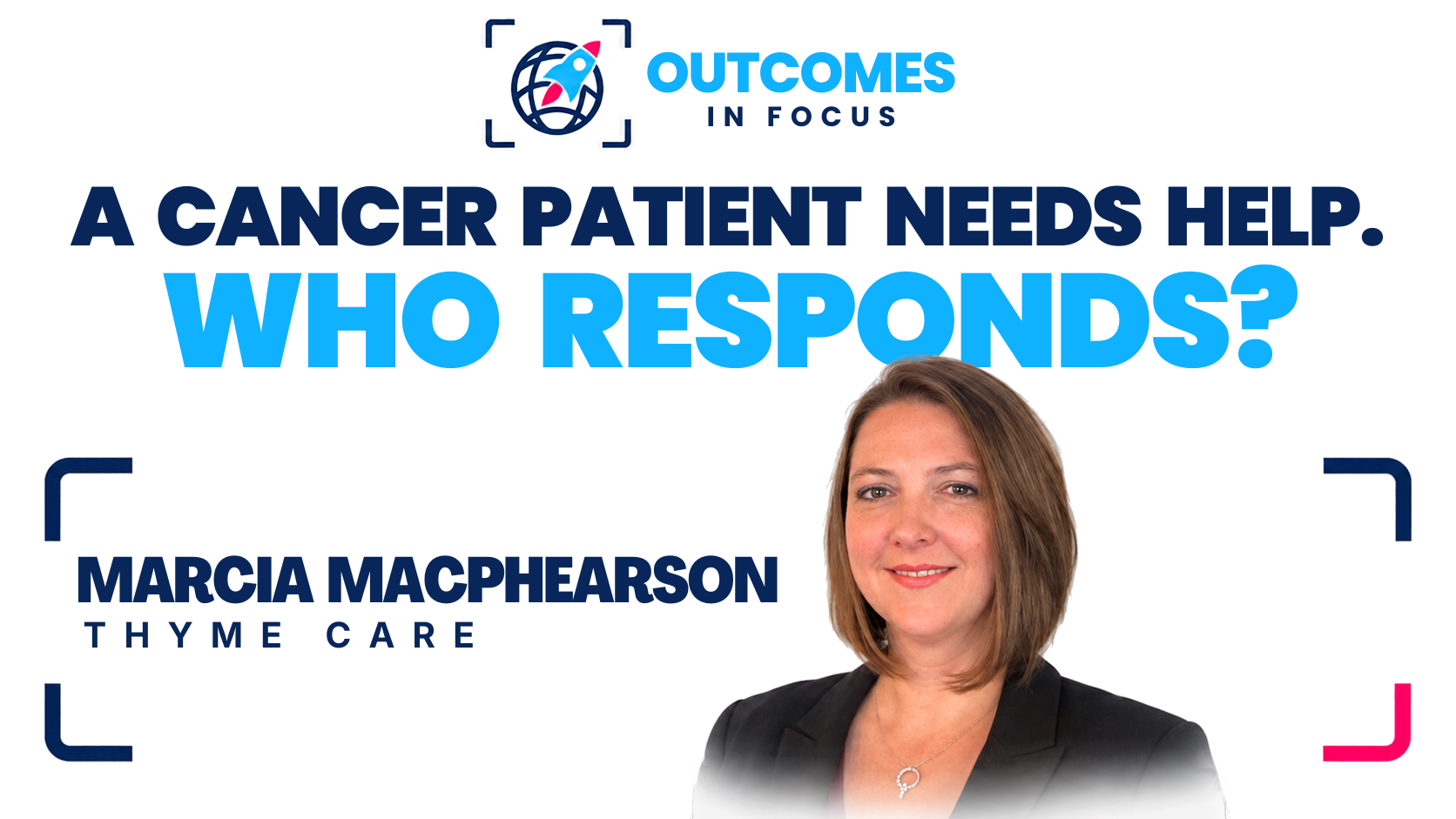
Featuring insights from Marcia Macphearson, Chief Operating Officer at Thyme Care, in a conversation with our CEO, Saul Marquez on the Outcomes Rocket podcast.
A cancer patient who was also managing diabetes began acting strangely. His partner, unable to help in person, contacted the patient's cancer care support team. The team reached him by phone, recognized that something was wrong and arranged an in-home wellness visit that afternoon. The visitor found him unconscious with low blood sugar and called emergency services.
Marcia Macphearson, Chief Operating Officer at Thyme Care, recounted the incident in her Outcomes Rocket interview. The story had been shared with her by the company's clinical team. It's a striking example of a care gap that could easily sit outside an oncology appointment. The patient's immediate problem wasn't a question about cancer treatment. It was a dangerous complication of another condition, noticed by someone who knew how to reach a trusted team.
For a health plan, oncology practice or care organization evaluating coordinated cancer care, that raises a useful question: When a patient's needs change between visits, who is responsible for recognizing the problem and getting help to them? The answer has to be more specific than offering another phone number.
Cancer Care Doesn't Happen in One Organization
An oncologist may guide treatment, but a patient also has a primary care physician, other specialists, medications, facilities and practical needs that can complicate the plan. The people involved want to help, yet each usually works within a particular part of the healthcare system.
Marcia describes the difficulty of navigating those separate pieces while facing a cancer diagnosis. Financial, social, clinical and emotional pressures don't arrive in neatly divided categories. Someone may need assistance understanding treatment and, in the same week, help with another chronic condition or a concern raised by a family member.
Thyme Care's model is intended to connect those parts. The company works with health plans and oncology practices, including practices in its oncology network, alongside its own multidisciplinary care team. Marcia describes its role as helping patients reach the right part of the healthcare ecosystem when they need support, rather than expecting patients to coordinate every handoff alone.
That approach has a practical implication for any organization choosing a care coordination partner. A list of available services isn't the same as an operating path between them. A plan and practice need to know how an incoming concern gets recognized, who can act on it and how the clinical team is informed when the issue exceeds a navigator's role.
Trust Matters When the Patient Needs Help Now
The diabetes incident makes that distinction visible. The patient's partner knew the care team was reachable. The team could contact the patient, recognize a concern and arrange a same-day response. The home visitor then called 911 when the situation required emergency care.
Marcia said the patient and his partner contacted the team the following day and credited it with saving his life. That's their account of one event, not evidence that every patient receives the same response or that a particular model guarantees an outcome. What it illustrates is the importance of an established relationship before a problem becomes urgent.
A care coordination program can record calls and send reminders without becoming a team someone trusts enough to contact when something feels wrong. In Marcia's account, the connection among the patient, partner and care team allowed information to travel and action to follow. The response depended on people and organizations fulfilling different responsibilities, not one professional trying to do everything.
For a prospective partner, the evaluation should follow that same path. Who can raise a concern, including an authorized family member or caregiver? What happens after hours? How does the team distinguish a navigation request from a clinical issue that must be escalated? Who confirms that the next action occurred? These are operational questions, but they determine what coordinated care feels like to the patient.
Give Clinicians Better Information, Not More Administrative Work
Marcia also sees an opportunity at the intersection of value-based care and AI. She describes clinicians working across information from plans, practices and patients while making decisions with a multidisciplinary team. The goal is to bring relevant information together and give clinicians more time to think about the person receiving care.
Her example comes from interdisciplinary palliative care rounds. Physicians were considering pain medication, nutrition and other needs as part of an individual patient's care. Making the relevant evidence easier to retrieve could help them focus on the clinical judgment and coordination that matter, rather than gathering information across systems and documenting the same work repeatedly.
This is a direction Marcia is excited about, not a claim that AI has already produced a measured improvement in those rounds. The distinction matters for buyers. A promising tool still needs to be evaluated against the work clinicians actually do, including whether the information is dependable and how decisions reach the patient's oncologist or other care team members.
A useful test is to take a real coordination task and trace it from the initial signal through the final handoff. Identify what clinicians need to know, where the data sits, what software could prepare and what still requires clinical review. If a new system simply creates another place to look, it may miss the problem it was intended to solve.
Make the Next Handoff the Measure
Value-based oncology care depends on more than bringing organizations into a contractual relationship. It requires a way for those organizations to respond together when a patient's needs cross their boundaries.
Before expanding a care coordination model, health plans and oncology leaders can review one realistic between-visit scenario with the people expected to handle it. Name the person who receives the concern, the clinician who decides when escalation is necessary, the partner responsible for the next service and the process for confirming the handoff. Include patients and authorized caregivers in that design, since they may be the first to recognize that something has changed.
The decision isn't whether the program can identify another patient need. It's whether the people involved can turn that information into appropriate action. Marcia's story shows why that distinction deserves attention well before an emergency call.
About the Conversation
Marcia Macphearson's conversation with Saul Marquez on Outcomes Rocket explores Thyme Care's work across health plans, oncology practices and multidisciplinary teams, its value-based care approach and Marcia's perspective on using AI to support clinical care.

Turn Healthcare Insightinto Accelerated Growth
Our healthcare growth teams work closely with you to design strategies tailored to your unique goals and market dynamics, fully focused on growth.
Book a Strategy Session →
Accelerating your growth with expert strategies in marketing, branding, research & insights, sales and lead generation to maximize healthcare impact.