A lot of companies are working harder than they need to on content.
They come up with an idea, turn it into a post or an article, publish it, and then move on to the next thing. A few days later, the team is back in the same place, asking, “What should we talk about now?”
That cycle gets exhausting. It also wastes a lot of good thinking. They need a system that helps them become articles, newsletters, sales conversations, social posts, and future topics the company can keep building on.
A content flywheel starts with what you already know
The strategy I keep coming back to is the content flywheel. Business flywheels are a topic that I discuss a lot with a good friend, mentor, and CEO of Censinet, Ed Gaudet.
It is a simple idea: instead of creating one piece of content, publishing it once, and moving on, you create a loop.
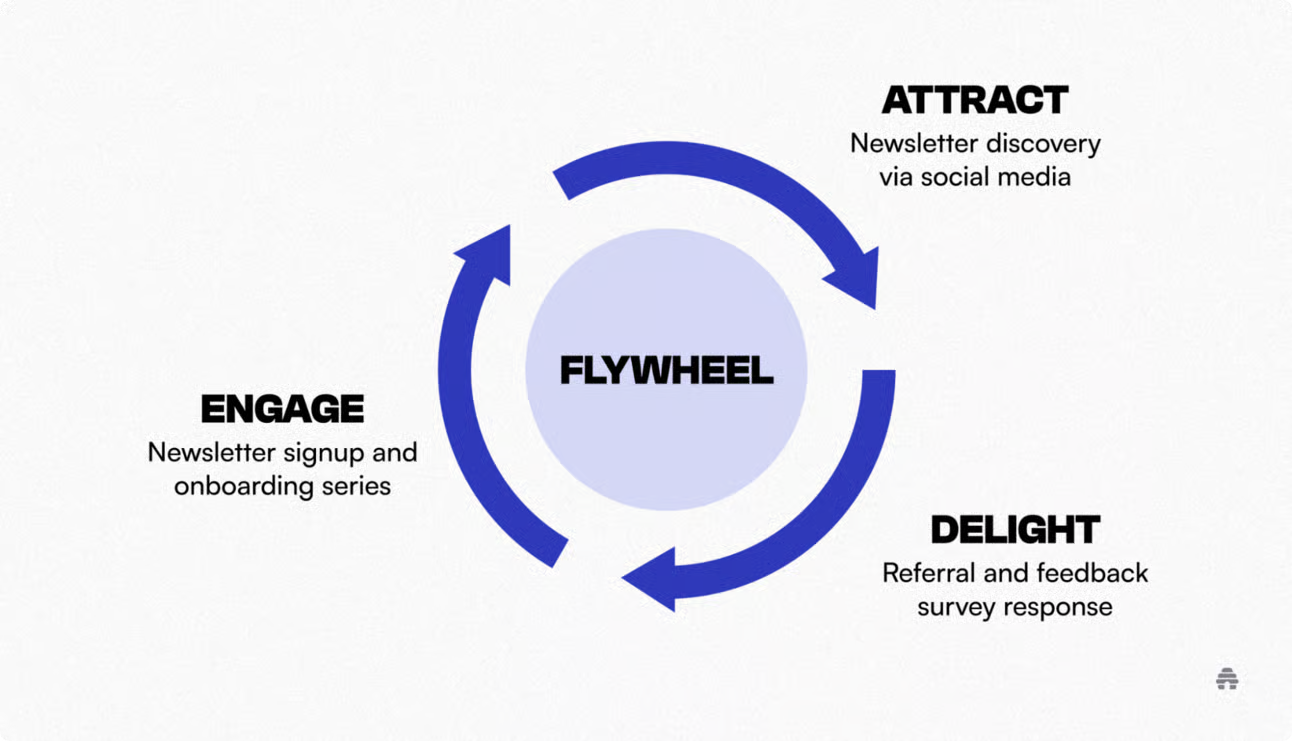
First, you attract people to your thinking. That might happen through a LinkedIn post, a podcast clip, a blog someone finds through search, or a piece a colleague forwards to them. Then you give them a reason to stay close. That is where newsletters are so valuable. They keep the relationship going in a more direct, consistent way.
HubSpot reported that blog posts were the third most-used content format by marketers and among the top five highest-ROI formats. Content Marketing Institute also found that 52% of B2B marketers expected their organizations to increase investment in thought leadership content. So even with all the attention on short-form video, AI, and social platforms, written content is still doing real work when it is useful and connected to a larger system.
Over time, if the content is actually useful, people start to respond. That response is direction. It tells you which ideas are worth building around.
A newsletter reply can become the next article. Or a podcast conversation can become a blog, then a few LinkedIn posts, then a follow-up resource for the sales team. Now content is moving through the business and giving the team a clearer sense of what to say next.
Let the blog do the deeper work
If your best ideas should not be one-time assets, they need a place where they can be fully developed. That is the role of the blog.
A strong blog helps the buyer understand the context, tradeoffs, common mistakes, and questions they should be asking before making a decision.
Take an implementation concern as an example. If buyers keep asking how long rollout takes, the deeper issue may be uncertainty around disruption and whether their team can actually absorb the change. That should not become one quick answer on a call and then disappear. It can become a thoughtful article on what makes implementation successful before the project even begins.
From there, the article becomes an anchor. Sales can send it after calls. The newsletter can pull out the most relevant takeaway.
The blog gives the idea weight, structure, and a longer life.
Let the newsletter keep the conversation going
Once the blog gives the idea depth, the newsletter keeps it moving.
That is an important part of the flywheel. If the article is published once and then sits on the website, the idea still has more work to do. The newsletter brings it back to the audience in a more direct, consistent way.
Staying with the implementation risk example above, the newsletter could narrow the idea to one practical takeaway: rollout problems usually begin long before the rollout itself. From there, it can give the reader a short list of things to pressure-test early, like who owns the change, how workflows will be affected, what needs to be communicated internally, and what success should look like in the first 90 days.
Now the idea has been reframed.
That is the difference between recycling content and building a flywheel. Recycling says the same thing again. A flywheel gives the idea another useful form so it can reach someone in a different moment, with a slightly different need.
Conclusion
At Outcomes Rocket, we produce quarterly hero campaigns. Our team applies the content flywheel to make sure the main idea does not live in one asset and then disappears.
If the quarterly theme is PR, AI visibility, and revenue, for example, that idea should move through the full system.
- A podcast episode can share the bigger executive perspective with a collaborator.
- The blog can make the idea more practical and searchable for AEO / SEO.
- The newsletter can pull out one timely takeaway and bring it directly to our audience.
- LinkedIn posts can break the theme into smaller points over several weeks.
Each channel has a different job, but they all work from the same core idea. Do the heavy lifting once, then cycle the idea through with less effort across the other channels.

Turn Healthcare Insightinto Accelerated Growth
Our healthcare growth teams work closely with you to design strategies tailored to your unique goals and market dynamics, fully focused on growth.
Book a Strategy Session →
Accelerating your growth with expert strategies in marketing, branding, research & insights, sales and lead generation to maximize healthcare impact.